

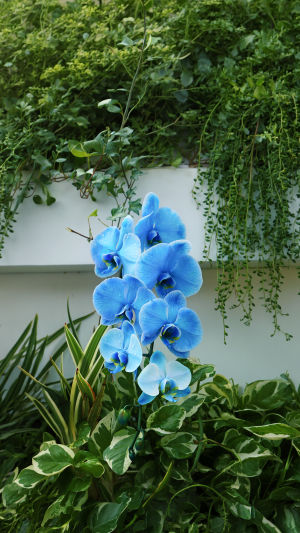
Blue Phalaenopsis orchids stand out because of their unusual color and elegant flowers. Their graceful stems and smooth petals make them attractive choices for gifts, home decorations, and special occasions.
Understanding their appearance, growing requirements, and care can help flower lovers appreciate these distinctive plants.
<h3>What Makes Blue Phalaenopsis Orchids Special?</h3>
Phalaenopsis orchids, commonly known as moth orchids, are popular for their graceful appearance and long-lasting blooms. Their rounded petals create an elegant shape that works well in simple arrangements and decorative displays.
Natural Phalaenopsis varieties commonly feature white, pink, and purple flowers, as well as various color combinations. Vivid blue blooms are less common, making blue orchids particularly noticeable. Their unusual appearance can add contrast to a room or become the focal point of a floral arrangement.
Beyond their color, these orchids are appreciated for their flowering stems, which can carry several blooms at once. With suitable care, the flowers can remain attractive for an extended period.
<h3>Are Blue Orchids Naturally Blue?</h3>
Many intensely blue Phalaenopsis orchids sold by florists are white-flowering plants that have been specially colored rather than naturally blue varieties. The coloring process introduces dye into the plant, giving its flowers a blue appearance. Methods can differ between growers, so buyers can ask how a particular orchid was treated.
The color may not remain the same after the flowers fade. When new blooms appear, they may revert to the variety's natural color, often white. This does not necessarily indicate a problem with the plant. It simply reflects the difference between artificially colored flowers and natural flowering characteristics.
<h3>Why Blue Orchids Make Memorable Gifts</h3>
Blue orchids offer an alternative to more familiar floral colors. Their distinctive appearance can complement modern interiors, office spaces, and decorative tables. They can also make thoughtful gifts for birthdays, celebrations, and other special occasions. A single potted orchid can create an elegant display without requiring a large bouquet. Several plants arranged together can produce a more noticeable decorative feature.
Presentation matters, too. A simple container allows the flowers to remain the main attraction. When selecting a gift, consider a plant with healthy leaves and several unopened buds so the recipient can enjoy the flowers as they develop.
<h3>How to Care for a Blue Phalaenopsis Orchid</h3>
Blue Phalaenopsis orchids generally need the same basic care as other Phalaenopsis varieties. Place the plant in a bright location with indirect light. Strong direct sunlight can damage its leaves, while insufficient light may affect flowering.
Watering requires attention because orchid roots need moisture without remaining constantly wet. Check the growing medium before watering, and ensure excess water can drain freely. How often watering is needed depends on temperature, humidity, container size, and the growing medium.
<h3>What to Check Before Buying</h3>
When choosing a blue orchid, look beyond the flower color. Healthy leaves should generally appear firm, and the roots should not show extensive damage or decay. Check the growing medium for excessive moisture and ask about the plant's care requirements. It is also helpful to confirm whether the blue appearance is natural or the result of coloring. This information sets realistic expectations about future blooms.
Blue Phalaenopsis orchids combine the elegance of moth orchids with a distinctive appearance that sets them apart. By understanding how the color is produced, selecting a healthy plant, and providing suitable light and watering, flower lovers can enjoy their orchids beyond the initial display. The key is to choose a plant that suits the space and provide the care it needs to grow and bloom again.


