

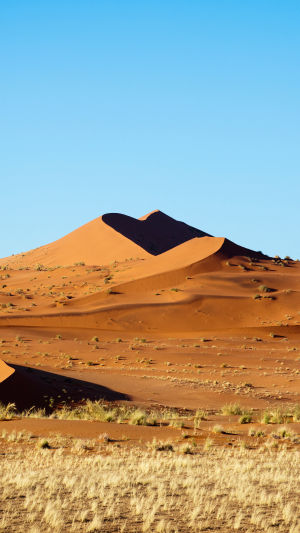
Hi, everyone. The Namib Desert looks like the easiest trip in the world on a map, one big stretch of sand in western Namibia.
But it's not just sand, and it's not a place you can wing. The dunes run over 300 meters tall at Sossusvlei, the distances between stops are measured in hours, and the heat decides your schedule whether you like it or not.
<h3>Why the dunes pull people in</h3>
Sossusvlei is the reason most travelers come. You climb Dune 45, a 170-meter ridge about 45 kilometers past the Sesriem gate, and the sand shifts from orange to deep red as the sun moves. Deadvlei sits nearby, a white clay pan holding camel thorn trees that died centuries ago and never rotted because the air is too dry. You walk among them in maybe 20 minutes, and it's the photo everyone brings home.
<h3>How you actually get there</h3>
Fly into Hosea Kutako International Airport outside Windhoek, then drive or join a shuttle. The road to Sesriem runs roughly 350 kilometers and takes about five hours on paved and gravel surfaces. A 2WD handles the main road fine, but the last 5 kilometers into Sossusvlei are deep sand, so you park and take the park shuttle, which runs about 200 Namibian dollars per person. Self-drive is common, and rental companies will hand you a sedan without blinking.
Namib Desert
<h3>Timing beats everything else</h3>
The gates at Sesriem open at sunrise and close at sunset, and the gate time matters more than your itinerary. Get in at opening, drive straight to Sossusvlei, and you'll have the dunes mostly to yourself for an hour. By 10 a.m. the sand surface hits temperatures that make walking unpleasant. May through September is the dry cool season, with nights dropping near freezing at Sesriem Camp, so pack a fleece even though you're in a desert.
<h3>What it costs and where you sleep</h3>
Camping inside the park at Sesriem Camp runs around 400 Namibian dollars per person per night, and it puts you at the gate before anyone else. Lodges outside the gate start near 2,000 Namibian dollars and climb fast. Park entry is about 100 Namibian dollars per person plus a vehicle fee. Book the camp months ahead for the June to August window, because it fills and there's no backup inside the park.
<h3>Plan for the dark and the distance</h3>
The Namib holds some of the darkest skies in southern Africa, and the Milky Way shows up within minutes of sunset at Sesriem. Bring a headlamp with a red setting so you don't wreck your night vision. Fuel up in Solitaire or Sesriem before any long drive, since the next station can be 200 kilometers out. Carry at least 4 liters of water per person per day, more if you're hiking.
The Namib rewards the traveler who treats it as a logistics problem first and a scenery stop second. Book the camp early, hit the gate at sunrise, and keep your water topped up. Do that, and the red dunes at first light will be the easiest part of the whole trip.


