

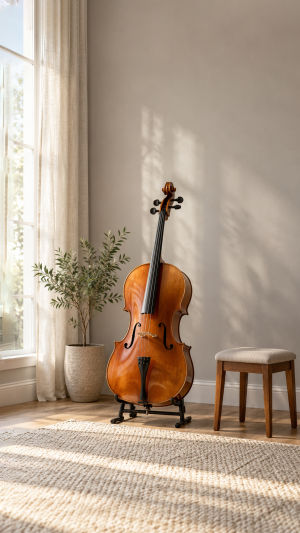
Lykkers, have you ever watched a cellist move gently with the music while producing clear, beautiful notes? Good playing depends not only on our hands but also on how we sit, hold the instrument, and move our bodies.
By learning a few simple techniques, we can feel more comfortable during practice and express the music more naturally.
<h3>Choose a Suitable Chair</h3>
The first step is finding a chair that supports a comfortable playing position. For players of average height, a seat around 45 centimeters high or lower may be a useful starting point. Our thighs should be roughly parallel to the floor, and both feet should rest firmly on the ground.
Sit near the front half of the chair, leaving enough room for your legs and the cello. Keep your back upright, with a slight forward lean if it feels comfortable. Separate your knees about as far as needed to position the instrument securely between them.
<h3>Keep Your Body Balanced</h3>
Good posture should feel stable rather than stiff. Our weight needs to be shared between the seat and both legs instead of resting entirely on the hips. This balanced position allows us to move more easily when playing different strings.
Before picking up the cello, spend a few minutes sitting comfortably. Check that your shoulders are relaxed, your feet remain flat, and your breathing feels natural. If your back feels strained, adjust your position or chair height. Repeating this exercise helps us develop habits that support longer practice sessions.
<h3>Position the Cello Correctly</h3>
Bring the cello between your legs and adjust the endpin until the instrument reaches a comfortable height. Its back should rest naturally against your chest, with the upper contact point near the right side of your chest.
Let your legs support the lower sides gently. Avoid squeezing the instrument, because too much pressure can limit movement. The cello may turn slightly toward your bowing hand to make reaching the A string easier, but the angle should remain comfortable.
Keep the neck of the instrument close to your own neck without pressing against it. We want our body and the cello to work together, allowing the instrument to feel secure without unnecessary force.
<h3>Relax Before You Play</h3>
Before starting, take a moment to release tension. Look toward your left hand, then your right hand. Lower your head gently and return it to a comfortable position. These small movements help us notice stiffness in the neck and shoulders.
Next, move the cello slightly away from your body, stand up carefully, and sit down again. Repeat the sequence slowly. This simple exercise helps us become more comfortable with our playing position and reduces the habit of holding the body too tightly.
Once you are seated again, check your feet, shoulders, and breathing. Then pick up your bow and practice open strings. Without changing notes with the left hand, you can focus on smooth bow movements and a steady sound.
<h3>Move Naturally Between Strings</h3>
Although the endpin provides a stable support point, the rest of our body does not need to stay completely still. Small movements help us reach different strings and follow the feeling of the music.
When playing the A string, gently turn the cello toward your bowing hand if needed. When moving to the C string, allow the instrument to shift slightly in the opposite direction. You may find it helpful to relax your left leg and lift your right heel a little during this movement.
Practice each string separately at a slow pace. Keep your movements small, maintain your balance, and avoid twisting your upper body too far. With repetition, these changes can become smoother and more natural.
<h3>Build Better Practice Habits</h3>
Start each session by checking your sitting position and instrument height. Practice the A and C strings slowly, paying attention to how easily your bow reaches them. If your shoulders rise or your legs grip the cello tightly, pause and relax before continuing.
You can also record a short practice session to observe your posture. Notice whether you lean too far, move suddenly, or struggle to keep the instrument steady. Correct one habit at a time, and ask a qualified teacher for help if discomfort continues.
<h3>Final Thoughts</h3>
Lykkers, comfortable cello playing begins with balanced sitting, gentle support, and natural movement. When we pay attention to these details, we can focus more fully on the sound and emotion of each melody.
During your next practice session, try these exercises and notice which adjustment helps you feel more relaxed. What part of holding the cello feels most challenging to you? Share your experience and keep discovering the joy of making music!


