

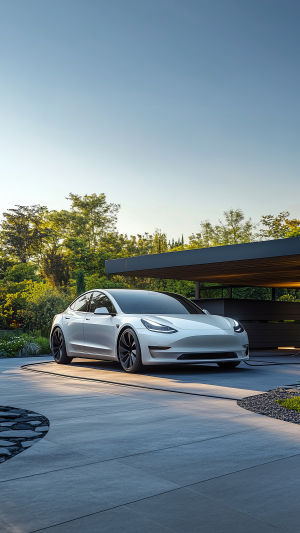
Europe’s transition towards electric mobility accelerated again in July 2026. Battery electric vehicles accounted for <b>24% of new car registrations</b> during the month, while their average share between January and July reached <b>22%</b>.
This was five percentage points higher than during the same period in 2025. The figures suggest that electric cars are no longer gaining ground only in a handful of early-adopter markets.
Demand is increasing across several of Europe’s largest automotive markets, although the pace of adoption still varies considerably from country to country.
<h3>Electric Cars Gain Ground</h3>
Germany and France remain particularly important to Europe’s transition because of the size of their car markets.
Between January and July 2026, battery electric vehicles represented <b>26% of new registrations in Germany</b>, an increase of eight percentage points compared with the same period a year earlier. France recorded an even higher share of <b>29%</b>, up 11 percentage points year on year.
Italy and Spain are progressing more gradually. Battery electric cars accounted for <b>8% of registrations in Italy</b> and <b>10% in Spain</b> during the first seven months of the year. Poland remained at <b>5%</b>, highlighting the significant differences in the pace of electrification across Europe.
July itself brought particularly strong results in several major markets. France reached a monthly battery electric share of around <b>35%</b>, Germany around <b>29%</b>, and the United Kingdom approximately <b>27%</b>.
<h3>Combustion Cars Continue to Decline</h3>
The growth of electric vehicles is being accompanied by a steady decline in registrations of conventional internal combustion engine cars.
Between January and July 2026, petrol and diesel vehicles together accounted for around <b>29% of new registrations</b>, nine percentage points less than during the same period in 2025.
Other electrified powertrains are also gaining ground. Mild hybrids reached a <b>24% market share</b>, full hybrids accounted for <b>14%</b>, and plug-in hybrids increased to <b>10%</b>. All three categories expanded their share compared with the previous year.
The figures show that electrification is taking several forms across the European market, although battery electric vehicles continue to represent the most significant long-term shift.
<h3>Manufacturers Move Closer to CO2 Targets</h3>
The growing share of electrified vehicles is also helping manufacturers move closer to the European Union’s carbon dioxide targets.
Between January 2025 and July 2026, manufacturers were, on average, only about <b>1 g/km above</b> the EU fleet target of <b>93 g CO2/km</b> for the 2025–2027 period.
Performance still varies considerably between manufacturers. Volkswagen remained the furthest from compliance among the major groups analysed, at around <b>7 g/km above its individual target</b>.
These results suggest that the European market is gradually adapting to tighter emissions requirements, although some manufacturers still have more work to do than others.
<h3>Charging Infrastructure Keeps Expanding</h3>
Europe’s public charging network continues to grow alongside electric vehicle registrations.
By the end of June 2026, approximately <b>1.2 million public charging points</b> had been installed across Europe. Fast-charging infrastructure was expanding particularly quickly, while countries including Belgium recorded some of the strongest annual growth rates.
The continued development of charging infrastructure remains essential because convenient and reliable access to charging is still one of the main factors influencing consumers’ willingness to switch from petrol or diesel cars to fully electric models.
<h3>The Market Is Changing Quickly</h3>
The latest data shows that Europe’s car market is entering a more mature stage of electrification. Battery electric vehicles are gaining a meaningful share in major countries, conventional combustion models are declining, and manufacturers are moving closer to regulatory targets.
<b>The transition remains uneven, but the overall direction is increasingly clear. Electric vehicles are becoming a central part of the European automotive market rather than a niche alternative, while the gap between leading and slower-moving countries is likely to remain one of the most important trends to watch.</b>


