

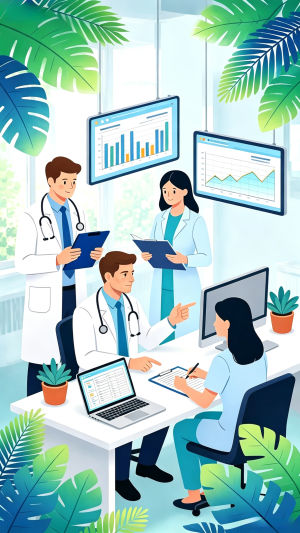
Healthcare is becoming increasingly data-driven as digital information plays a greater role in modern care.
Healthcare data analytics converts complex health information into meaningful insights that can support clinical decisions, identify patterns, and improve care processes.
From electronic health records to predictive technologies and artificial intelligence, data analytics is helping healthcare professionals make more informed use of available information.
<h3>What Is Healthcare Data Analytics?</h3>
Healthcare data analytics is the process of collecting, organizing, and analyzing health-related information to identify useful patterns and insights. Data can come from electronic health records, laboratory results, medical imaging, monitoring systems, and other digital sources.
Analyzing this information can help healthcare professionals better understand patient needs, evaluate care, and make evidence-informed decisions.
<h3>How Healthcare Providers Use Patient Data</h3>
Healthcare professionals use medical data analytics to examine patient information, monitor changes, evaluate treatment responses, and support care planning. Analyzing data over time can also reveal trends that may inform healthcare services and resource planning.
Clinical data analysis can contribute to quality improvement and help organizations evaluate how effectively their services are being delivered.
<h3>Key Benefits of Data Analytics in Healthcare</h3>
When used appropriately, analytics can provide several benefits:
- Earlier risk identification: Data patterns can help highlight potential health concerns that may require further assessment.
- Informed care decisions: Relevant information can help clinicians tailor care to individual circumstances.
- Greater operational efficiency: Analytics can identify process delays and opportunities for improvement.
- Better care coordination: Accessible, well-organized information can support communication among healthcare professionals.
- Population health insights: Aggregated data can reveal broader trends and help identify healthcare needs across groups.
<h3>Supporting Clinical Decision-Making</h3>
Healthcare analytics can give clinicians timely access to relevant information from multiple sources. This broader view can complement professional assessment and provide additional context when evaluating a patient's condition.
“The real value of data is when it is used appropriately to inform decisions at all levels of the health system.” — World Health Organization.
Analytics does not replace clinical expertise. Healthcare professionals must consider examination findings, patient preferences, medical history, and individual circumstances when making decisions.
<h3>The Role of Electronic Health Records</h3>
Electronic health records (EHRs) are an important source of structured healthcare information. They may contain medical histories, diagnoses, medications, laboratory results, and other clinical details.
When managed securely, EHR data can be analyzed to identify patterns, support quality improvement, and provide information that contributes to coordinated care.
<h3>Predictive Analytics in Healthcare</h3>
Predictive analytics uses historical and current data to estimate the likelihood of future events or health risks. In healthcare, these methods can help identify individuals who may benefit from additional monitoring or preventive interventions.
Predictive results should be interpreted carefully because accuracy depends on factors such as data quality, model performance, and individual patient characteristics.
<h3>AI and Machine Learning</h3>
Artificial intelligence and machine learning are expanding the capabilities of healthcare analytics. These technologies can analyze large datasets, identify complex patterns, and assist with applications such as risk assessment, medical imaging analysis, and clinical decision support.
Successful implementation requires reliable data, appropriate validation, human oversight, and responsible use. AI should complement professional judgment rather than independently determine patient care.
<h3>Protecting Healthcare Data</h3>
Healthcare information requires strong privacy and security measures. Organizations should use appropriate safeguards to protect patient information and maintain the integrity of digital systems.
Secure infrastructure, controlled access, responsible data management, and compliance with applicable privacy requirements are essential elements of trustworthy healthcare technology.
<h3>Challenges in Healthcare Analytics</h3>
Implementing analytics across healthcare systems requires careful planning. Organizations may need to address differences in data formats, incomplete information, system integration, technical requirements, and data security.
Effective implementation also depends on sound governance, skilled professionals, reliable datasets, and ongoing evaluation of analytical tools.
<h3>The Future of Data-Driven Care</h3>
Healthcare data analytics is expected to become increasingly connected with artificial intelligence, predictive methods, real-time monitoring, and integrated digital systems. These developments may provide healthcare professionals with faster access to useful information and support more efficient care coordination.
As these technologies evolve, responsible data management and human oversight will remain essential to ensuring that innovation continues to serve patient needs.
Healthcare data analytics is transforming how health information is interpreted and used in modern care. By combining electronic health records, clinical data analysis, predictive analytics, and AI, healthcare organizations can gain insights that support informed decisions, efficient processes, and coordinated services. The continued value of these technologies will depend on reliable data, secure systems, responsible implementation, and professional oversight.


