

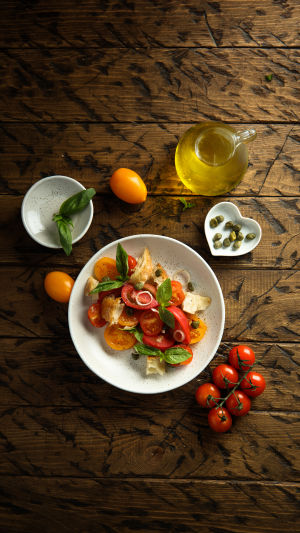
There is something wonderfully practical about panzanella. A loaf that has gone a little too dry, tomatoes that are almost too ripe and a few herbs can become a full, satisfying salad instead of ending up forgotten in the kitchen.
The secret is not simply mixing bread with vegetables. Good panzanella depends on texture: the bread should absorb tomato juices and dressing without turning into mush. Once You understand that balance, the basic recipe becomes incredibly flexible.
<h3>1. Start With the Right Bread</h3>
Slightly stale bread is actually better than fresh bread here.
Fresh slices are too soft and can collapse as soon as they meet the dressing. Bread that has dried for a day or two is firmer, which means it can soak up liquid gradually while still keeping some structure.
A rustic loaf with a chewy crust works particularly well. Cut it into generous cubes rather than tiny croutons.
If the bread is still fresh, leave the pieces uncovered for a few hours or toast them briefly in the oven. You want them dry around the edges, but not so crisp that they become difficult to chew.
<b>Tip:</b> think “dry and sturdy,” not “hard as a crаcker.”
<h3>2. Let the Tomatoes Make the Dressing</h3>
Tomatoes are what make summer panzanella special.
Choose the ripest ones You can find and cut them into large pieces. Season with salt and leave them for several minutes before assembling the salad.
This small step draws out their juices.
Instead of throwing that liquid away, use it. Add olive oil and a little vinegar or lemon juice, and You already have the foundation of a dressing.
When the bread is tossed through this mixture, it absorbs the tomato flavour rather than simply becoming wet.
Cherry tomatoes, large slicing tomatoes or a combination of different varieties can all work.
<b>Best result:</b> use tomatoes that are sweet enough to taste good with nothing more than salt.
<h3>3. Add Crunch and Freshness</h3>
Tomato and bread are enough to make a basic panzanella, but a few additional ingredients improve the contrast.
Cucumber is one of the easiest additions because it stays crisp even after the bread begins to soften.
Thinly sliced red onion adds sharpness, while fresh basil brings the classic summer aroma.
Roasted peppers can add sweetness, and capers or olives work well when You want a more savory finish.
The trick is restraint.
Panzanella should not become a bowl filled with twenty unrelated ingredients. Choose two or three additions that complement the tomatoes rather than compete with them.
<h3>4. Give It Time—But Not Too Much</h3>
This is where the texture can either become perfect or completely fall apart.
Once the bread, tomatoes and dressing are combined, let the salad rest briefly.
Ten to twenty minutes is usually enough for the bread to absorb flavor while keeping some chew.
Taste a piece before serving. If the centre is still dry, give it a few more minutes. If everything already feels very soft, serve immediately.
<b>The ideal panzanella should be juicy, not soggy.</b>
You should still be able to recognize the pieces of bread rather than having them dissolve into the bowl.
<h3>5. Turn It Into a Full Meal</h3>
Panzanella works beautifully as a side, but it can easily become lunch or dinner.
Add torn mozzarella for creaminess, white beans for extra substance or grilled chicken if You want more protein.
Grilled zucchini and eggplant are excellent late-summer additions because their smoky flavour works naturally with tomatoes and bread.
You can also add corn for sweetness or fresh herbs such as parsley and dill for a slightly different direction.
<b>Easy summer combination:</b> tomatoes, cucumber, basil, mozzarella and toasted bread with a simple olive oil dressing.
<h3>6. Try It Beyond Tomato Season</h3>
The method is much more useful than one specific recipe.
When tomatoes disappear, roasted vegetables can take their place.
In autumn, try roasted squash with onions and herbs. During spring, asparagus and peas can work with a lighter dressing. Even mushrooms and roasted peppers can create a colder-weather version.
The bread remains the foundation, soaking up whatever juices and dressing the seasonal ingredients provide.
<h3>Make Leftovers Worth Keeping</h3>
Panzanella is one of those recipes that feels less like dealing with leftovers and more like deliberately saving something for later.
There is no complicated sauce, no difficult technique and no long ingredient list. The dish succeeds because dry bread does something fresh bread cannot: it becomes a sponge for every good flavour around it.
<b>Before throwing away a loaf that has started to harden, cut it into chunks and save it. Add ripe vegetables, olive oil, herbs and a little acidity, and what looked like yesterday’s bread can become one of the most satisfying meals of summer.</b>


