

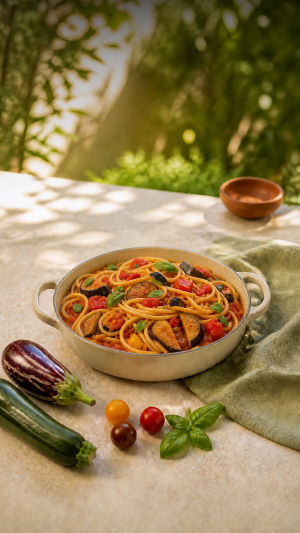
Ratatouille and spaghetti come together surprisingly well in this easy recipe. The secret is to add the vegetables in stages. Some are browned until soft and deeply savoury, while others go in later so they keep more freshness and texture.
The spaghetti cooks directly in the tomato mixture, releasing starch that naturally thickens the liquid into a glossy sauce.
<h3>Ingredients</h3>
120 ml extra-virgin olive oil, divided, plus extra for serving
454 g eggplant, unpeeled and cut into 2.5 cm pieces
4½ tsp kosher salt, divided
2 large zucchini, about 340 g each
1 small yellow onion, about 170 g, chopped
6 garlic cloves, finely minced
1 tbsp chopped fresh thyme
½ tsp crushed red pepper flakes, plus extra for serving
1.64 litres water
640 ml passata
340 g dried spaghetti
1 medium red, yellow or orange bell pepper, about 283 g
255 g plum or Roma tomatoes
28 g fresh basil leaves, roughly torn
<h3>Brown the Eggplant</h3>
Heat <b>60 ml olive oil</b> in a large Dutch oven or deep saucepan over medium heat.
Add the eggplant and ½ teaspoon salt. Cook for <b>8–12 minutes</b>, stirring occasionally, until deeply browned and tender.
This first step gives the eggplant a silky texture and much deeper flavour than simple simmering.
Transfer it to a bowl and set aside.
<h3>Build the Vegetable Base</h3>
Cut one zucchini into larger 2.5 cm pieces and the second into smaller bite-size pieces.
Heat the remaining <b>60 ml olive oil</b> in the same cookware.
Add the larger zucchini pieces, onion and another ½ teaspoon salt. Cook for about <b>6 minutes</b>, until the zucchini softens and starts to brown.
Add the garlic, thyme and red pepper flakes. Stir for about <b>30 seconds</b>, just until fragrant.
Return the eggplant.
The larger zucchini pieces will continue softening during cooking and partly melt into the sauce, giving it more body.
<h3>Add the Tomato Base</h3>
Pour in the water and passata, then add the remaining 3½ teaspoons salt.
Bring everything to a gentle simmer over medium-high heat.
The passata is intentionally kept under control. Too much would overwhelm the eggplant, zucchini and pepper and turn the dish into ordinary tomato spaghetti. Here, it simply ties the vegetables together.
<h3>Cook the Spaghetti</h3>
Add the dried spaghetti directly to the simmering mixture.
Reduce the heat to medium-low, cover and cook for <b>8 minutes</b>.
Stir frequently so the pasta does not stick together or catch on the bottom.
As the spaghetti cooks, it releases starch into the liquid. This gradually thickens the sauce and helps it cling to both the pasta and vegetables without requiring any additional thickener.
<h3>Add the Remaining Vegetables</h3>
After the first 8 minutes, add the smaller zucchini pieces and bell pepper.
Cover again and continue cooking for another <b>6–8 minutes</b>, stirring regularly. By the end, the spaghetti should be al dente while the vegetables remain tender with a little bite.
Stir in the fresh chopped tomatoes and torn basil, then immediately remove from the heat. Adding them at the very end keeps the tomatoes juicy and the basil fresh and aromatic.
<h3>Serve Immediately</h3>
Divide the spaghetti between six bowls. Finish with a small drizzle of olive oil, extra basil and a pinch of crushed red pepper flakes if you want a little more heat. The finished dish has several textures at once: silky eggplant, softer zucchini, tender pepper and juicy tomato, all wrapped around glossy spaghetti.
<h3>Why the Method Works</h3>
Classic ratatouille often requires preparing the vegetables separately so each one keeps its own character.
This version achieves a similar result much more simply. By adding the ingredients at different moments, some become deeply cooked and concentrated while others stay brighter and fresher. <b>The result is a comforting summer pasta with rich vegetable flavour, varied texture and far less washing up afterward.</b>


