

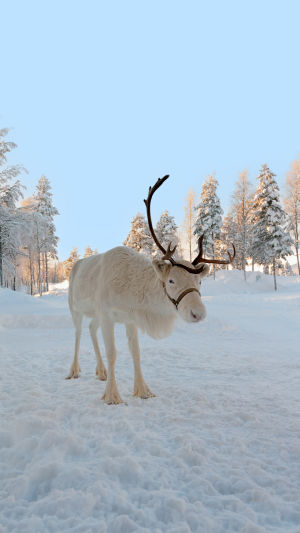
Hey Readers! A white reindeer may look like a creature made for a storybook, but its survival in freezing weather is grounded in biology, not magic.
Whether the pale coat comes from a naturally light-colored animal or from the snowy backdrop that makes it appear white, the reindeer’s real winter advantage is a powerful set of adaptations that trap heat, reduce energy loss, and help it keep moving when temperatures plunge.
<h3>A Coat Built for the Cold</h3>
The first shield against winter is the fur itself. Reindeer grow a double-layer coat: a dense underfur close to the skin and a longer outer layer made of hollow guard hairs. Those hollow hairs trap air, and the trapped air acts as insulation, slowing heat loss even in wind and snow.
That fur does more than hold warmth. It also blocks moisture, which matters because wet hair loses insulating power quickly. In Arctic conditions, staying dry is almost as important as staying warm, and the reindeer’s coat is designed to handle both at once. This is one reason the animal can remain outside in weather that forces humans indoors within minutes.
<h3>The Nose That Recycles Heat</h3>
A reindeer’s nose is a small engineering marvel. Specialized passages inside the nasal cavity warm cold air before it reaches the lungs, and on the way out, they recover some of the heat and moisture that would otherwise be lost. This countercurrent heat exchange keeps the animal from wasting precious body warmth every time it breathes.
That feature becomes especially valuable in deep winter, when air is painfully dry and cold. The nose does not just protect the lungs; it also helps conserve water. In an environment where liquid water may be frozen and food can be scarce, that saved moisture is part of survival.
<h3>Saving Energy, Not Burning It</h3>
Reindeer do not stay warm by constantly producing large amounts of extra heat. Instead, they conserve energy whenever possible. During winter, food becomes scarce, so they eat much less than they do in warmer seasons. To meet their energy needs, their bodies gradually draw on reserves built up during the summer and autumn.
This matters because heating a large body takes fuel. Reindeer reduce unnecessary movement, stand still more often, and keep a low-energy routine when conditions are harsh. In practical terms, winter warmth is not only about insulation; it is also about spending as little energy as possible on everything that is not survival.
<h3>Feet, Snow, and the Problem of Ground Cold</h3>
Keeping warm is not only about the torso. The feet matter too, because cold ground can drain heat fast. Reindeer hooves change with the season: in summer they are broader and softer for wet ground, while in winter the footpad shrinks and the rim of the hoof becomes more exposed, giving better grip on ice and snow. That same structure helps them dig through snow to reach food.
By avoiding slips and reducing time spent struggling on icy surfaces, the feet help limit energy waste. A reindeer that moves efficiently across snow loses less heat than one that must fight the terrain. In Arctic life, clean movement is part of thermoregulation.
<h3>Eyes, Antlers, and Winter Strategy</h3>
Though not directly about body warmth, reindeer eyes and antlers also support winter survival. Their vision changes with the seasons, becoming more suited to dim light, which helps them find lichen and avoid predators during long Arctic nights. Female reindeer keep their antlers through winter, helping them compete for and defend access to limited food. Better access to food means better energy balance, which indirectly helps the animal maintain body temperature.
A white reindeer’s survival is therefore a whole-system story. Fur, nose, feet, metabolism, and behavior all work together. One trait alone would not be enough; the warmth comes from the combined design of the animal itself.
The beauty of the white reindeer is that it shows how winter survival can be elegant rather than flashy. The animal does not defeat the cold by fighting it head-on. It survives by preventing heat loss, recycling warmth, conserving fuel, and choosing movements that make the environment less costly.


