

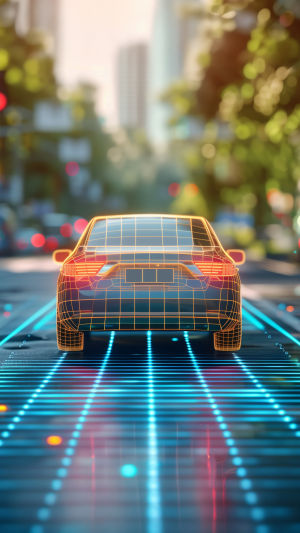
If you have been paying attention to the automotive industry lately, you have probably noticed that vehicles are no longer just machines that take us from one place to another.
They are becoming intelligent systems on wheels, with artificial intelligence (AI) playing a central role in this transformation.
From enhancing safety to improving convenience and efficiency, AI is reshaping the way vehicles are designed, built, and driven. Let us explore how this remarkable technology is changing the future of transportation.
<h3>Perceiving the World Around the Vehicle</h3>
One of the most significant roles AI plays in modern vehicles is helping them understand their surroundings. This is achieved through a combination of cameras, radar, lidar, and ultrasonic sensors that continuously collect data from the environment. AI-powered processing systems analyze this information in real time to identify pedestrians, other vehicles, road signs, lane markings, and unexpected obstacles.
This ability to perceive and interpret the surrounding environment makes advanced driver assistance systems (ADAS) possible. Features such as automatic emergency braking, lane-keeping assistance, and adaptive cruise control rely on AI to improve driver awareness and support safer driving.
<h3>From Driver Assistance to Advanced Automation</h3>
AI is not only enhancing driver safety but also enabling increasingly advanced levels of vehicle automation. Modern systems can assist with tasks such as parking, maintaining lane position, controlling speed on highways, and responding to changing traffic conditions.
As AI technology continues to develop, vehicles are becoming capable of managing a growing number of driving functions while still operating within carefully designed safety frameworks. To achieve this, AI systems must rapidly process enormous amounts of sensor data and make accurate decisions within fractions of a second.
<h3>Learning and Improving Over Time</h3>
One of AI's greatest strengths is its ability to learn and improve continuously. Machine learning algorithms analyze large amounts of driving data collected from a wide variety of road conditions, weather situations, and traffic environments. This ongoing learning process helps improve the system's ability to recognize patterns and respond more effectively to different driving scenarios.
Many modern vehicles also support over-the-air software updates, allowing new features, performance improvements, and system enhancements to be installed without requiring a visit to a service center. As a result, vehicle software can continue to evolve throughout its lifetime.
<h3>Creating a Personalized Driving Experience</h3>
AI is also transforming the driving experience by making vehicles more personalized and convenient. Intelligent voice assistants allow drivers to control navigation, adjust climate settings, and manage entertainment systems using natural language, helping reduce distractions while driving.
In addition, AI can remember individual preferences such as seat position, mirror adjustments, climate settings, and frequently used navigation routes. Some systems can also monitor driver alertness and provide reminders when signs of fatigue or reduced attention are detected, contributing to a safer driving experience.
<h3>Smarter Manufacturing and Predictive Maintenance</h3>
The influence of AI extends beyond driving itself. During vehicle production, AI-powered automation and intelligent quality inspection systems help improve manufacturing precision, increase efficiency, and reduce production errors.
AI also supports predictive maintenance by continuously monitoring the condition of important vehicle components. By identifying early signs of wear or potential issues, the system can recommend maintenance before a problem becomes more serious. This proactive approach helps reduce unexpected repairs, improve vehicle reliability, and support long-term ownership.
<h3>Driving the Future of Mobility</h3>
Artificial intelligence continues to shape the future of the automotive industry through continuous innovation. As AI systems become more advanced, vehicles are expected to deliver higher levels of safety, efficiency, comfort, and convenience.
Rather than simply serving as a means of transportation, future vehicles will increasingly function as intelligent mobility platforms capable of adapting to driver preferences and changing road conditions. With ongoing technological progress, AI is helping create a smarter, more connected, and more efficient driving experience for everyone.
Artificial intelligence has become one of the most important technologies driving the evolution of modern vehicles. From improving safety and supporting driver assistance to enhancing manufacturing and creating personalized experiences, AI is transforming nearly every aspect of the automotive world. As innovation continues, intelligent vehicles will play an increasingly important role in making transportation safer, more efficient, and more enjoyable for everyday drivers.


