

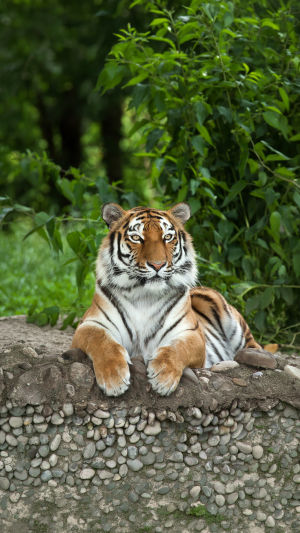
Dear Lykkers, have we ever wondered why the tiger, one of nature’s most powerful big cats, prefers to live alone while other predators form groups? At first glance, it may look like a lonely lifestyle. But once we look deeper, we realize it is actually a smart survival strategy shaped by time, environment, and instinct.
Let’s explore together how this quiet and powerful hunter found its own perfect way of living.
<h3>Food Balance Shapes a Solo Path</h3>
One of the main reasons behind the tiger’s solo lifestyle is food availability. A grown tiger needs a large amount of meat to maintain its strength. It may consume dozens of kilograms in a single feeding and requires steady hunting success throughout the year.
In dense forest environments, prey animals are spread out and not found in large herds. This is very different from open grasslands, where animals often move in groups. If several tigers shared the same territory, food sources would be quickly reduced.
By living alone, each tiger controls its own territory and has direct access to hunting grounds. There is no need to share catches or compete within a group. This balance allows the animal to survive more efficiently and avoid unnecessary stress.
<h3>Strength That Does Not Depend on Company</h3>
Another key factor is physical ability. The tiger is naturally built for independence. Its body strength, sharp senses, and explosive speed allow it to handle hunting tasks without assistance. Unlike some predators that rely on group coordination, this big cat can approach, target, and capture prey on its own. In its habitat, there is little need for teamwork when survival skills are already highly developed. Because of this natural advantage, forming groups would not bring extra benefit. Instead, staying independent becomes the most practical choice.
<h3>Silent Hunting Style Needs Space</h3>
The tiger is a master of quiet movement. Its striped body pattern helps it blend into grass, bushes, and shadowed areas. This camouflage is essential for its hunting method, which depends on surprise and precision.
If multiple animals moved together, even small sounds or movements could reveal their position. That would reduce hunting success and push prey away too early.
Solitary movement keeps everything quiet and controlled. The tiger can adjust its path freely, wait patiently, and strike at the right moment. This method fits perfectly with its environment and lifestyle.
<h3>Territory and Natural Boundaries</h3>
Each tiger maintains a clear territory marked through natural signals. These boundaries help avoid conflict and reduce unnecessary interaction between individuals. Most of the time, tigers prefer to stay within their own areas. Encounters with others are rare and usually limited to specific life stages, such as reproduction periods. This system creates a stable balance in the ecosystem. Each individual has enough space and resources, allowing the population to remain steady without overcrowding.
<h3>Mother and Cub Connection</h3>
Although tigers live alone, they do experience close family moments. A mother raises her cubs alone, teaching them how to move, observe, and hunt step by step.
During this period, the young learn essential survival skills through observation and practice. Once they grow strong enough, they leave to establish their own territory.
This temporary family bond ensures the next generation can continue independently. It is a short but meaningful connection within an otherwise solitary lifestyle.
<h3>Why Solitude Is Actually Strength</h3>
To many readers, solitude may sound like isolation. But for the tiger, it represents control, efficiency, and confidence. Every choice in its lifestyle is linked to survival needs shaped by environment and instinct.
There is no unnecessary dependence. Every action is self-managed, from movement to hunting to territory defense. This independence is what allows the tiger to remain one of the most capable predators in its ecosystem.
As we finish this journey, Lykkers, we can see that the tiger’s solo lifestyle is not about loneliness. It is about balance between nature, skill, and adaptation.
Instead of relying on groups, it relies on its own ability and the space it controls. This teaches us a simple idea: different environments create different ways of living, and each one has its own logic.
So next time we think of the tiger walking alone through its territory, we might see not solitude, but quiet confidence shaped by nature itself.


