

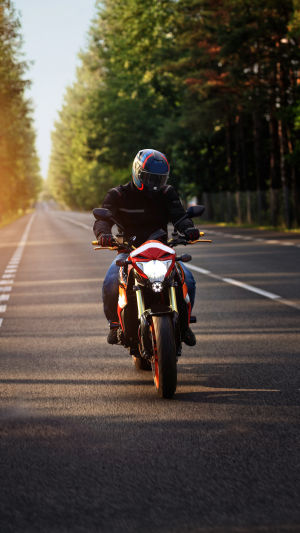
The first few months on a motorcycle are a lot to process. Clutch, throttle, brakes, mirrors, traffic — all at once. Most new riders focus hard on not falling over, which is fair enough.
However, there are smaller habits, the kind no one thinks to mention, that quietly make a massive difference once they click into place.
Here's the honest truth: you'll probably pick these up eventually on your own. Or you won't, and you'll wonder why riding still feels a little off after a year. Either way, building them early is just smarter.
<h3>Keep Your Heels Pressed In</h3>
On a sportbike, there are small diamond-shaped metal plates right beside where your feet rest. They're not decorative. Press your heel against that plate and suddenly the bike feels noticeably more stable — especially at speed. It's a tiny adjustment, but try riding without it for a week after you've gotten used to it. Your feet will feel like they're floating.
<h3>Loose on Top, Tight on Bottom</h3>
The correct riding position is basically the opposite of what feels natural. Squeeze your thighs into the tank and press your ankles into the bike. That lower-body grip is what keeps you connected when the road gets rough. Your upper body — arms, shoulders, hands — should stay as relaxed as possible. A death grip on the handlebars is one of the most common reasons new riders struggle through corners. If you can't wiggle your elbows while riding, you're too stiff.
<h3>Enter Turns Outside-Inside-Outside</h3>
Approach a corner from the outside, clip the inside apex, exit back toward the outside. This is the same line racing instructors teach, and it works just as well on regular roads. It gives you the widest possible view through the turn and reduces how much lean angle you need. Practice it even on slow surface streets — it becomes second nature fast.
<h3>Brake Before, Not During</h3>
Hitting the brakes mid-corner is bad news. The bike immediately wants to stand up straight, which can push you wide of the turn — and past the apex, that can get messy fast. Brake before you lean in, then roll the throttle gradually through the turn. Accelerating out of a corner is smooth, predictable, and actually makes the bike feel more stable.
<h3>Look Through the Turn</h3>
Where your eyes go, the bike follows. Turn your head and look as far through the corner as possible — much further than feels necessary. Roads literally seem to widen when you do this. The MSF course really hammers this point, sometimes to the point of feeling exaggerated. They hammer it because it works.
<h3>Keep the Visor Down</h3>
Bugs hit a full-face shield hard enough to leave marks. At 60 mph, even a small piece of debris can feel like a slap. Keep the visor closed. Open it slightly at a stoplight if you need airflow, but that's about it. Eye protection isn't optional — it just sometimes doesn't feel urgent until the first time something bounces off your face shield at highway speed.
<h3>Ride Like You're Invisible</h3>
Defensive riding means assuming other drivers genuinely cannot see you. Most of the time, they can't. Keep an escape route in mind at all times — especially on highways, where lane changes happen fast. If you're travelling faster than the lane beside you, assume someone is about to drift into your lane without signalling.
Not out of paranoia, just habit. The riders who stay safe long-term are the ones who plan for other people's mistakes before they happen.


