

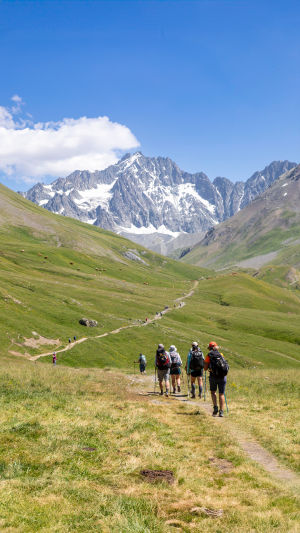
High above the clouds, tucked within the granite folds of the Grisons, survives a linguistic specimen that sounds like a romantic collision between Latin and the mountain wind. This is Romansh (Rumantsch), a language that refused to die.
While the rest of Europe succumbed to the massive gravitational pull of German, French, and Italian, the isolated valleys of southeast Switzerland acted as a natural "circuit breaker" for cultural assimilation.
To hear Romansh is to witness a living fossil of the Roman Empire's northern frontier. It is a language forged by the mechanical isolation of deep snow and vertical rock, a resilient "SOP" for survival in the most rugged terrain in Europe.
Romanche
<h3>The Linguistic Blueprint</h3>
Romansh is a Rhaeto-Romance language, a direct descendant of the vernacular Latin spoken by Roman legionaries and settlers. Its structure is a mechanical marvel of preservation, having survived for over 1,500 years in near-total isolation.
The language is not a monolithic block but a collection of five distinct "idioms" or dialects: Sursilvan, Sutsilvan, Surmiran, Puter, and Vallader. Each valley developed its own phonetic "specimen," governed by the specific geography that separated it from its neighbors. In 1938, the Swiss people voted to recognize Romansh as a national language, and later, the "Rumantsch Grischun" was engineered as a standardized written form to unify the valleys. It is a high-precision linguistic tool that allows a shepherd in the Surselva to communicate with a hotelier in the Engadin, bridging a gap that was once only crossed by treacherous mountain passes.
<h3>The Alpine Stronghold</h3>
To experience this linguistic specimen in its natural habitat, one must travel to the Canton of Graubünden. This is the only place in the world where Romansh is an official administrative tongue, visible on every street sign and heard in every local bakery.
<b>Graubünden Travel Logistics</b>
• Transportation: The high-speed "Rhätische Bahn" (Rhaetian Railway) is the mechanical heart of the region. A "Graubünden Pass" for two days of unlimited travel costs approximately $95. Take the train from Zurich to Chur, the gateway to the Romansh heartland.
• Key Village: Visit Guarda, a specimen of "Schellen-Ursli" architecture. It sits at 1,650 meters and is a car-free zone. Access it via the Scuol-Tarasp rail line for about $12.
• Accommodation: Staying in a traditional "Engadin" stone house in Scuol or Samedan typically costs between $180 and $350 per night. These structures feature massive walls designed for thermal retention.
• Cultural Experience: The "Cuminanza Rumantscha Radio e Televisiun" offers insights into Romansh media. Entrance to local heritage museums is usually priced around $10 to $15.
<h3>Mechanical Preservation</h3>
The survival of Romansh in the 21st century is a study in "cultural maintenance." Because the total number of speakers is under 60,000, the language requires a constant "SOP" of protection.
<b>Survival Strategies of a Minority Tongue</b>
• Educational Immersion: In Romansh-speaking communes, the language is the primary "operating system" for primary schools, ensuring the next generation of specimens remains fluent.
• Linguistic Tech Integration: Software developers have worked to ensure Romansh is available in digital vocal tracts and translation engines, preventing a digital "structural collapse" of the tongue.
• The Chalandamarz: A traditional spring festival where children use massive cowbells to create high-decibel vibrations, intended to "expel" the winter. It is a rhythmic, mechanical ritual of renewal.
• Literary Resilience: Romansh literature is a high-output industry relative to its population, producing thousands of books that keep the vocabulary from stagnating.
<h3>The Resonance of the Peak</h3>
Romansh reminds us that identity is often a matter of "vertical resistance." It is easy to flow with the massive currents of global languages, but there is a unique resonance in holding onto a sound that is yours alone. The language survives because the people of the Grisons decided that their "internal air column" should reflect the history of their peaks, not the convenience of the plains.
Reflect on your own "native tongue": Are you speaking with your own voice, or have you allowed the dominant "dialects" of society to overwrite your personal specimen? Romansh teaches us that even the smallest voice can echo for centuries if it is anchored in a solid foundation of tradition and communal will. True strength isn't about the number of people who understand you; it's about the integrity of the sound you produce. Are you ready to defend your own "Alpine fortress," or will you let your unique frequency be silenced by the snow? Success is found in the persistence of the echo.


