

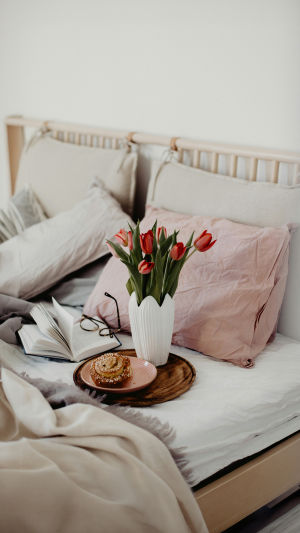
A vase sitting empty on a shelf is already doing something.
It has weight, color, texture, and a silhouette that either belongs in the room or quietly clashes with everything around it.
Add flowers, and the effect doubles — suddenly the vase is the frame, and the flowers are the painting, and if the frame is wrong, the painting suffers regardless of how beautiful it is. Most people choose vases impulsively, drawn to something that catches the eye in a shop without considering where it will actually live. That gap between the shop and the shelf is where most vase mistakes happen.
Choosing the right vase for a home is a more considered process than it appears — one that involves thinking about scale, material, shape, and the specific role the vase will play in the space it occupies.
<h3>Match the Vase Scale to the Space</h3>
Scale is the variable that causes the most visible problems when it is wrong. A vase that looks substantial on a shop shelf can disappear on a large dining table, and one that feels compact in a showroom can overwhelm a narrow side table at home.
Before selecting a vase, consider where it will be placed and what surrounds it. A floor vase — typically standing 24 inches or taller — works in rooms with high ceilings, generous floor space, and furniture that sits at a human scale. Placed in a smaller room, the same vase can create the impression that the room is shrinking around it.
Table vases work differently depending on the surface they occupy. A vase on a dining table needs to be low enough that people seated across from each other can maintain eye contact over it — generally no taller than 10–12 inches for a standard table. A vase on a console or sideboard has more height latitude because it is viewed from standing height and does not need to accommodate sightlines across a seated group.
A single statement vase reads more powerfully than a cluster of mismatched sizes. If grouping vases is the intention, varying height while keeping a consistent material or color palette creates cohesion rather than visual noise.
<h3>Choose the Material Based on the Room's Character</h3>
The material a vase is made from carries its own visual and tactile quality, and that quality either reinforces or contradicts the character of the room it enters.
1. Ceramic vases are the most versatile option. Their matte or glazed surfaces suit both warm and cool interiors, they come in an almost unlimited range of forms and colors, and their weight gives them a stable, grounded presence that suits both traditional and contemporary spaces.
2. Glass vases — clear or colored — add lightness and transparency to a room. They work particularly well in spaces with natural light, where the light passes through the glass and creates subtle shifts in tone throughout the day. Clear glass is also forgiving with stem arrangements, since the stems themselves become part of the visual composition.
3. Terracotta and unglazed clay vases carry warmth and a handmade quality that suits rooms with natural materials — linen, timber, woven textiles, stone. They do not suit spaces with a cooler, more industrial aesthetic as naturally.
4. Metal vases in brass, copper, or matte black bring a harder edge and a more deliberate design statement. They suit rooms that already lean contemporary or minimal, where the precision of a metal form reads as intentional rather than cold.
5. Stone or concrete vases add significant visual weight and a raw, architectural quality. They work as anchoring objects in rooms that need grounding — spaces that feel too light or too decorative benefit from the solidity these materials provide.
<h3>Think About Shape in Relation to the Flowers</h3>
A vase shape determines which flowers it can actually hold well, and choosing a shape without thinking about the stems that will go inside it leads to arrangements that look awkward regardless of how beautiful the flowers themselves are.
- Narrow-necked vases — with openings of two inches or less — suit single stems or small bunches that benefit from being held upright and close together. Tulips, ranunculus, and long-stemmed roses all work well in this format.
- Wide-mouthed vases allow stems to spread naturally and support loose, abundant arrangements. Dahlias, garden roses, and mixed wildflower bunches need room to open outward, and a narrow neck prevents them from doing so.
- Bulbous vases with a narrow neck and a wide body offer the best of both — the neck holds stems in position while the body allows the arrangement to expand above it. This shape is the most forgiving for home arrangements where precise florist technique is not being applied.
<h3>Consider the Vase as a Standalone Object</h3>
Not every vase needs to hold flowers to earn its place in a room. A well-chosen vase sitting empty on a shelf or mantle is a sculptural object in its own right — its form, color, and texture contributing to the room's character without requiring weekly maintenance or fresh stems.
For this role, the vase's silhouette matters most. A form with genuine visual interest — an unusual proportion, a subtle surface texture, or an unexpected color — holds attention on its own. A vase that relies entirely on its contents for visual impact will look absent and purposeless when empty.
The best vase for a home is not the most striking one in isolation. It is the one that makes the room feel more complete — that adds presence without demanding attention, and that holds flowers in a way that makes both the arrangement and the space look better simultaneously. That combination takes more thought than impulse buying allows. But the result, sitting quietly in the right corner of the right room, tends to justify every moment spent getting it right.


