

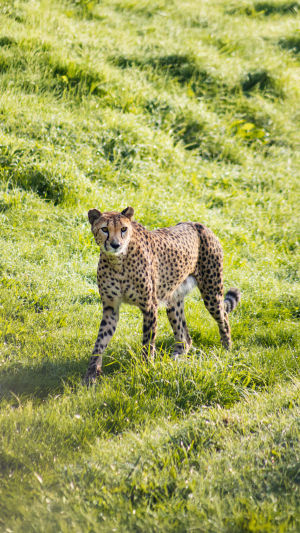
When we think of speed in the animal kingdom, the first creature that comes to mind is usually the cheetah.
Revered for its incredible ability to sprint at remarkable speeds, the cheetah is often considered the fastest land animal on Earth. But is it really the fastest?
In this article, we'll explore the cheetah's speed, how it compares to other fast animals, and whether it truly holds the title of the fastest creature on land.
<h3>1. The Cheetah's Sprinting Power</h3>
The cheetah's speed is nothing short of extraordinary. It can accelerate from 0 to 60 mph (97 km/h) in just a few seconds. With a top speed of around 60–70 mph (97–113 km/h), this sleek predator is built for short bursts of extreme speed. It achieves this speed thanks to its specialized body structure, including a flexible spine that allows it to stretch its body length while running, and powerful, muscular hind legs that propel it forward.
However, the cheetah's sprint is limited in duration. While it can run incredibly fast, it can only maintain these speeds for a very short distance—usually around 200–300 meters. Beyond that, the cheetah risks overheating and exhausting its energy reserves.
<h3>2. How Does the Cheetah Compare to Other Animals?</h3>
While the cheetah is certainly fast, there are other animals that can rival or even surpass its speed in different contexts. Let's break down a few of the other top contenders:
- The Brazilian free-tailed bat: While it might seem surprising, the Brazilian free-tailed bat holds the title for the fastest animal in level flight, reaching speeds of over 99 mph (160 km/h). This makes it faster than the cheetah, but only when flying.
- The Peregrine falcon: Known for its high-speed dives, the peregrine falcon can reach speeds of 240 mph (386 km/h) when hunting. However, this speed is only during a dive, so it doesn't qualify in the same category as the cheetah when considering sustained flight or land-based running speed.
- The Sailfish: In the water, the sailfish is often considered the fastest creature, reaching speeds of 68 mph (110 km/h). While it doesn't quite match the cheetah's land speed, its aquatic agility is unmatched.
<h3>3. Why Cheetahs Are Built for Speed</h3>
Cheetahs are the epitome of speed when it comes to terrestrial movement. Their body is uniquely designed for acceleration:
- Large nasal passages allow for increased oxygen intake.
- Lightweight frame reduces resistance during sprints.
- Non-retractable claws provide better traction, allowing them to grip the ground effectively.
- Long tail acts as a rudder, helping maintain balance and stability at high speeds.
<h3>4. The Speed Limits of the Cheetah</h3>
Despite its impressive speed, the cheetah is not without limitations. Unlike predators that rely on stamina, such as wolves or lions, the cheetah is a sprinter. Its speed comes at a cost: it tires quickly and is vulnerable if it cannot catch prey within a short time. This high-intensity sprint leaves little energy for a second attempt.
Additionally, cheetahs are less agile than other predators, which can be a disadvantage if prey make sharp turns or zig-zags.
<h3>5. Why the Cheetah is Still the Fastest Land Animal</h3>
While some animals are faster in air or water, the cheetah remains the fastest land animal. Its ability to accelerate rapidly and achieve bursts of incredible speed is unparalleled among terrestrial creatures. The cheetah's anatomy is perfectly designed for sprinting, making it an extraordinary predator on the African plains.
<h3>Conclusion: The Fastest… for Now?</h3>
While the cheetah is not the fastest animal across all environments, it holds the title of the fastest land animal, capable of remarkable bursts of speed. Its unique anatomy and sprinting prowess make it awe-inspiring, yet other animals surpass it in air and water, highlighting the fascinating diversity of speed across the animal kingdom.


