

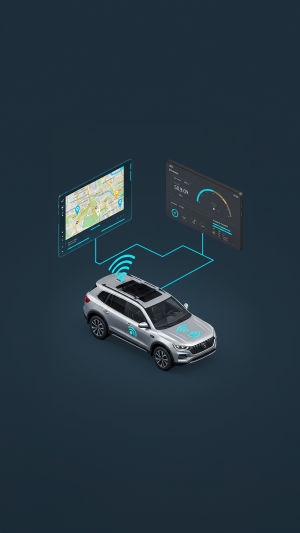
Picture this: You're driving down the highway, and your car gently steers itself, adjusts the speed to match the traffic flow, and warns you when you're veering out of your lane.
You didn't touch a thing, yet your car is handling most of the driving. This isn't a sci-fi scenario anymore—it's the reality of smart car technology, and it's changing the way we drive.
Smart cars are no longer just a futuristic concept—they're on the roads today, bringing a host of technologies that make driving safer, more efficient, and more connected. But what exactly does this mean for drivers like you? Let's explore how smart car technology is reshaping the driving experience.
<h3>Increased Safety Features</h3>
One of the biggest selling points of smart cars is the safety improvements they bring. With sensors, cameras, and radar systems, these vehicles can detect potential hazards before the driver even notices. Technologies like lane-keeping assist, automatic emergency braking, and adaptive cruise control are making it easier to avoid accidents.
These systems can warn drivers of obstacles, automatically apply the brakes to prevent collisions, and even take control in some situations to avoid crashes. While they don't eliminate the need for attentive driving, they provide an extra layer of security.
1. Collision avoidance: Automatic braking can prevent or reduce the severity of crashes.
2. Lane-keeping assist: The car helps you stay in your lane, reducing the risk of drifting off course.
3. Adaptive cruise control: Adjusts your speed to match the traffic flow, reducing the need for constant acceleration and braking.
<h3>Convenience at Your Fingertips</h3>
Smart car technology doesn't just enhance safety—it also makes your daily driving experience more convenient. Have you ever wished your car could find parking for you? With smart cars, this is becoming a reality. Many vehicles now come with self-parking features that can parallel park or park in tight spots with minimal effort.
Furthermore, the integration of voice assistants means you can control everything from navigation to climate settings without taking your hands off the wheel. Some smart cars also have remote features that allow you to start the engine, adjust the temperature, or even unlock the doors from your phone.
1. Self-parking: No more circling the parking lot searching for a spot—your car will park itself.
2. Voice control: Hands-free control over your car's features means you can keep your focus on the road.
3. Remote access: Control your car from your phone, whether it's pre-conditioning the cabin or locking the doors.
<h3>Improved Fuel Efficiency</h3>
Smart car technology isn't just about convenience—it can also help save you money. Many modern smart cars come with energy-saving features that optimize fuel efficiency. For example, predictive energy management systems can adjust your driving patterns based on real-time traffic data, ensuring that your vehicle is always operating in the most fuel-efficient manner.
Some electric smart cars use intelligent systems to maximize battery life, ensuring that you get the most out of every charge. Whether you're driving a gas-powered vehicle or an electric one, smart tech helps reduce your fuel consumption and makes the driving experience more sustainable.
1. Energy-efficient driving: Smart tech ensures you use less fuel by adapting to traffic conditions.
2. Optimized routes: Some systems analyze traffic and suggest the best routes to save time and fuel.
3. Better battery management: For electric cars, smart systems help extend battery life and maximize range.
<h3>Enhanced Connectivity and In-Car Experience</h3>
Smart cars are all about connectivity. They seamlessly integrate with your smartphone, apps, and even your home systems. With built-in Wi-Fi and Bluetooth, your car can connect to your devices, so you can access your favorite music, make calls, or even send messages without lifting a finger.
In addition, these vehicles are becoming increasingly integrated with home automation systems. For example, if you're running late, you could tell your car to adjust the thermostat at home before you arrive. These features make your car a hub of convenience, keeping you connected no matter where you are.
1. Seamless integration: Sync your phone and apps with your car for a fully connected experience.
2. Voice-activated commands: Use voice assistants to control entertainment, navigation, and climate.
3. Smart home integration: Control your home's devices right from your car, adding another layer of convenience.
<h3>Potential Drawbacks: Over-Reliance on Technology</h3>
While smart car technology offers many benefits, it also introduces some challenges. One potential downside is that, as drivers become accustomed to automated systems, they might lose some of the skills needed for active driving. For instance, a driver who relies too much on lane-keeping assist might not be as prepared to take control if the system fails.
Moreover, there's the question of data privacy. Smart cars collect vast amounts of data on their drivers' habits, locations, and even health information (for cars with health monitoring). Ensuring that this data is secure and used ethically is a growing concern.
1. Over-reliance on automation: Drivers may become too dependent on technology, losing essential driving skills.
2. Privacy concerns: The data collected by smart cars raises questions about how that information is used and protected.
3. Technology failures: In rare cases, technology malfunctions could result in system failures or accidents.
Smart car technology is quickly transforming the way we drive, offering a range of benefits that make driving safer, more convenient, and more efficient. While the tech is not without its challenges—especially when it comes to privacy and over-reliance on automation—the future of driving is undeniably more connected than ever before.
As these technologies continue to evolve, the question isn't whether they'll change the way we drive, but how quickly we'll adapt to them. So, next time you hop in your car, take a moment to appreciate just how far smart technology has come—and how much further it will go in shaping the future of driving.


