

It started with a slice of dragon fruit at a street market. The vibrant magenta flesh looked almost too pretty to eat, but one bite revealed something mildly sweet, subtly floral, and incredibly refreshing.
That single taste opened a door—there's an entire world of exotic fruits offering flavors you won't find in your everyday grocery run.
Trying these fruits isn't just about curiosity; it's about exploring new textures, aromas, and even nutrients your diet might be missing. Let's take a closer look at some that deliver both a unique sensory experience and genuine health benefits.
<h3>1. Mangosteen – The "Queen" of Tropical Fruits</h3>
Mangosteen has a thick, deep purple rind hiding snow-white segments inside. The flavor? Imagine a blend of peach, strawberry, and pineapple with a hint of creaminess. It's sweet, tangy, and perfectly balanced.
<b>Why it's worth seeking out:</b> Mangosteen is rich in xanthones, plant compounds studied for their antioxidant and anti-inflammatory effects. Research in Food Science & Nutrition suggests these compounds may help support immune function and healthy skin.
<b>Best way to eat it: </b>Chill it before slicing. Twist open and scoop the white segments out with a spoon. Perfect as a light dessert or blended into a tropical smoothie.
<h3>2. Rambutan – Sweetness Wrapped in Spikes</h3>
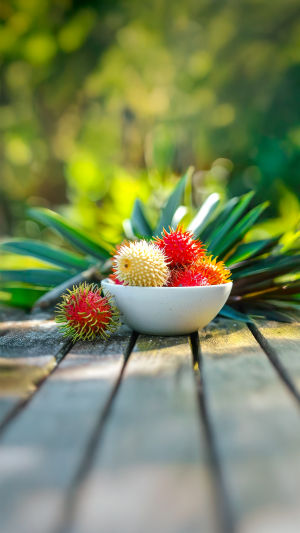
Rambutan looks like a small, hairy cousin of lychee. Beneath its red-and-green spiky skin is translucent, juicy flesh with a mildly sweet flavor and a floral aroma.
<b>Why it's worth seeking out:</b> It's a good source of vitamin C and copper—both important for healthy collagen production and energy metabolism. Because it's high in water content, it's also an excellent hydrating snack on hot days.
<b>Best way to eat it: </b>Score the skin with a tool, peel, and pop the flesh straight into your mouth. Just watch for the seed in the center.
<h3>3. Passion Fruit – Tangy, Aromatic, and Packed with Nutrients</h3>
Passion fruit is small but intensely flavorful. Split open the hard shell, and you'll find golden pulp dotted with crunchy seeds. The taste is a sweet-tart explosion with tropical floral notes.
<b>Why it's worth seeking out:</b> Beyond its addictive flavor, passion fruit is high in dietary fiber and contains plant sterols, which nutritionists like Dr. Maria O'Connor highlight as beneficial for maintaining healthy cholesterol levels.
<b>Best way to eat it: </b>Spoon the pulp over yogurt, mix into drinks, or eat it straight for a vitamin-rich snack.
<h3>4. Salak (Snake Fruit) – Crisp, Sweet, and Surprising</h3>
Named for its reddish-brown, scaly skin, salak peels easily to reveal firm, crisp cloves of fruit. The flavor combines apple-like crunch with the sweetness of honey and a touch of acidity.
<b>Why it's worth seeking out:</b> Salak is rich in potassium, making it a great snack for maintaining fluid balance and supporting muscle function. It's also high in antioxidants like tannins, which help fight oxidative stress.
<b>Best way to eat it: </b>Peel and eat fresh, or slice into fruit salads for added crunch.
<h3>Making Exotic Fruits Part of Your Life</h3>
You don't have to fly to a tropical island to try these. Many specialty grocery stores and international markets carry them fresh or frozen. Here's how to make the most of your tasting journey:
<b>1. Buy small quantities first –</b> Exotic fruits can be pricey, so start with a single piece to test if you enjoy the flavor.
<b>2. Learn the ripeness cues –</b> Mangosteen should have a firm but slightly yielding shell, passion fruit should be slightly wrinkled for peak sweetness.
<b>3. Pair with familiar foods –</b> If the flavor feels too strong, mix it into yogurt, smoothies, or salads.
Biting into a fruit you've never tried before is like traveling without a plane ticket—it's a small adventure that wakes up your senses. Whether you're drawn to the floral tang of passion fruit or the creamy sweetness of mangosteen, each bite connects you to a different corner of the world.
So, what's the most unusual fruit you've ever eaten? You might just find your new favorite flavor hiding under a spiky shell or behind a scaly skin.